For years, canning season meant one thing: standing over a pot of boiling water in the middle of summer, blanching tomatoes as fast as I could before they got overripe.
Then I learned you can freeze tomatoes and can them later.
Now, I just rinse, core, and toss them into gallon freezer bags. When the weather cools, and I want to stock the pantry, I pull out a few bags and spend an afternoon canning. No rush, no stress, no blanching in summer heat.

Here’s how I turn frozen tomatoes into shelf-stable canned tomatoes using the hot pack method from the Ball Blue Book Guide to Preserving.
In This Post:
- Why Can Tomatoes?
- Using Tested Recipes
- Equipment Needed
- Ingredients
- Step-by-Step Process
- Canning Tips
- Canning FAQs
Why Can Tomatoes?
Canned tomatoes are one of those pantry staples that just make life easier. They’re ready when you need them for soup, chili, pasta sauce, or stew. And there’s something satisfying about opening a jar you put up yourself, especially in the middle of winter. They taste better than anything you’ll find at the store, too, brighter, fresher, with that garden flavor still intact.
Unlike salsa or sauce, plain canned tomatoes are simple and flexible. You season them when you cook, which means one batch works for a lot of different meals.
Using Tested Recipes
I follow the Ball Blue Book’s tested hot pack method for canning tomatoes. It’s straightforward and safe. I’ve used this recipe for many years with frozen tomatoes without any issues.
When using frozen tomatoes, you must bring them to a boil before packing them into jars. This isn’t just a recommendation – it’s a safety requirement. Frozen tomatoes need to be heated all the way through to ensure they’re safe to can. That’s why I quarter or halve my tomatoes instead of leaving them whole. Smaller pieces heat more evenly and faster.
As long as you follow the tested recipe (correct acid amounts, proper headspace, and accurate processing times), canning frozen tomatoes is just as safe as canning fresh ones. The tomatoes are heated to boiling before packing, which is exactly what the hot pack method calls for.
The recipe also calls for adding lemon juice or citric acid to each jar to bring the acidity to a safe level for water-bath canning. Not all tomato varieties are acidic enough on their own, so this step isn’t optional.
If you’re at a higher altitude, make sure to check Ball’s processing time adjustments.
Equipment Needed
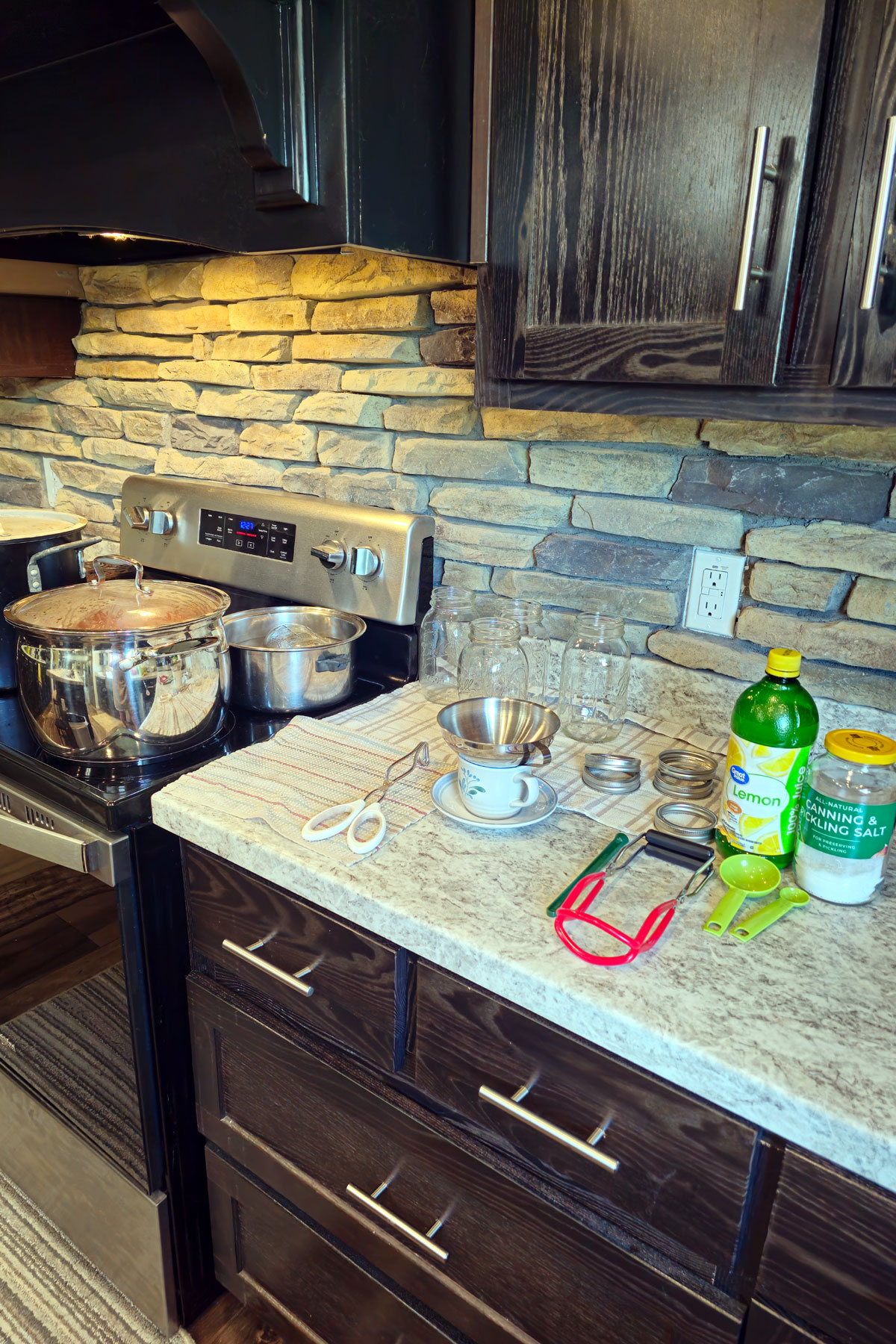
For this recipe, you’ll need basic water-bath canning equipment:
- Water-bath canner
- Pint or quart jars with matching lids and rings
- Large stockpot for heating the tomatoes
- Canning funnel, jar lifter, and bubble-removing tool
- Measuring spoons
- Ladle
- Cutting board and knife
Ingredients
Tomatoes. Plan on about 2½ to 3½ pounds of tomatoes per quart jar. I usually pull out 2 to 3 gallon-sized freezer bags for a batch of 5 quarts. Your quantity may vary depending on how you pack the freezer bag. You can also do pints if you prefer smaller jars.
Lemon juice or citric acid. This is required for safe canning. You’ll add 2 tablespoons of bottled lemon juice (or ½ teaspoon citric acid) per quart jar, or 1 tablespoon lemon juice (or ¼ teaspoon citric acid) per pint jar.
Salt (optional). I usually add ½ teaspoon of salt per pint or 1 teaspoon per quart, but it’s just for flavor. You can leave it out if you want.
Step-by-Step: How to Can Tomatoes Using Frozen Tomatoes
Before I start, I set up my canning station. I sterilize the jars and keep them hot in a pot of simmering water on the stove. I fill the water-bath canner about two-thirds full and start heating it so it’s ready when I need it.
Step 1: Thaw and peel the tomatoes
I pull the frozen tomatoes out of the freezer and let them sit in a colander in the sink for about 30 minutes. Once they start to thaw, I rinse them briefly with warm water. The skins slip right off when I squeeze the tomatoes gently. Sometimes there’s a stubborn spot, but a quick flick of the knife takes care of it.
No blanching. No ice bath. Just easy.
Step 2: Heat the tomatoes
After peeling, I chop the tomatoes into quarters or halves and add them to a large stockpot. I bring them to a boil over medium-high heat, stirring occasionally to keep them from sticking. Once they’re boiling, I reduce the heat and let them simmer for about 5 minutes. This gets them hot enough for the hot pack method.
Step 3: Pack the jars
Using a ladle and canning funnel, I fill each jar with the hot tomatoes, leaving ½ inch of headspace at the top. I run a bubble remover (or spatula) around the inside of the jar to release any trapped air. I add the lemon juice and salt, then wipe the rim with a clean, damp cloth. I place the lid on top, and screw on the ring finger-tight.
Step 4: Process in the water-bath canner
As soon as the jar is filled, I lower it into the simmering water in the canner. I top it off if necessary, with enough water to cover the lids one inch. Once all the jars are in, I bring the water to a rolling boil and process them according to Ball’s recommended time: 40 minutes for pints or 45 minutes for quarts at my altitude.
When the time’s up, I turn off the heat and remove the lid. After waiting 5 minutes, I use the jar lifter to move the jars to a wooden cutting board. I cover them with a kitchen towel and let them cool for 12 to 24 hours.
While they cool, I listen for the satisfying “ping” of the lids sealing. The next day, I remove the rings, wash the jars with warm soapy water, label them with the date, and store them in the canning cupboard.
That’s it. Simple, tested, and ready to pull out whenever I need tomatoes for dinner.
Canning Tips
- Use canning varieties like Amish Paste, San Marzano, or Rutgers. They have thicker walls and less water, which makes them ideal for preserving.
- Check your jars for chips or cracks before using them, and always use new lids.
- Follow Ball’s processing times exactly, and adjust for altitude if needed.
- After cooling, test the seal by pressing the center of the lid. It shouldn’t move. If a jar didn’t seal, put it in the fridge and use it within a week.
Water-bath Canned Tomatoes Using Frozen Tomatoes
Equipment
- 1 Water bath canner
- 4 Quart Jars with lids and rings optional – use pint jars to fit in your canner
- 1 Large Stock Pot To heat the tomatoes
- Canning Tools funnel, jar lifter, bubble removing tool
- Measuring spoons
- Ladel
- Cutting board and knife
Ingredients
- 8 -10 lbs. Frozen tomatoes approximately three 1-gallon freezer bags
- 2 tbs. Bottled lemon juice per quart jar
- ½ tsp. canning salt per quart jar (optional)
Instructions
- Partial thaw the tomatoes by letting them drain in a colander ½ to 1 hour.
- Prep canning station by stove and sterilize canning jars.
- Put canner 2/3 full of water on stove and bring to a simmer over medium-high heat.
- Rinse and peel tomatoes. Cut into halves or quarters and put in stock pot.
- Bring tomatoes to a boil over medium-high heat.
- Boil gently for 5 minutes, stirring to prevent sticking.
- Fill hot jars with tomatoes, add the lemon juice and optional salt, leaving ½" headroom space.
- Clean lip of jar, put on the lids, and finger-tighten the ring.
- Place jars as they're filled into the simmering canner using tongs.
- Make sure there's one inch of water above the top of the jars, cover the canner, and bring water to a rolling boil.
- Process according to Ball Bue Book canning directions for your elevation. I process mine 40 minutes for pints and 45 minutes for quarts.
- When processing time is done, turn off burner and uncover the canner. Let sit for 5 minutes.
- Remove jars from the canner and place on a heat-proof surface to cool. Cover with a kitchen towel for 12-24 hours.
- Clean jars, remove rings, label, and store in a cool, dark location.
Notes
FAQs
Yes, thaw them enough to remove the skins and chop them into quarters or halves. You don’t need to fully thaw them to room temperature — just enough so the skins slip off easily and you can cut them. They’ll finish heating through when you bring them to a boil in the stockpot.
Properly canned tomatoes last 12 to 18 months when stored in a cool, dark place. After that, they’re still safe to eat if the seal is intact, but the quality starts to decline — the color fades, and the flavor gets a little flat. I try to use mine within a year for the best taste.
Hot pack means you heat the tomatoes to boiling before filling the jars, while raw pack means you put raw tomatoes directly into jars and pour boiling water or juice over them. For frozen tomatoes, you must use hot pack because they need to be heated all the way through to be safe for canning.
No, stick with bottled lemon juice for canning. Fresh lemon juice can vary in acidity depending on the lemon, and that inconsistency isn’t safe for canning. Bottled lemon juice has a standardized acidity level, which is what the tested recipes require.